


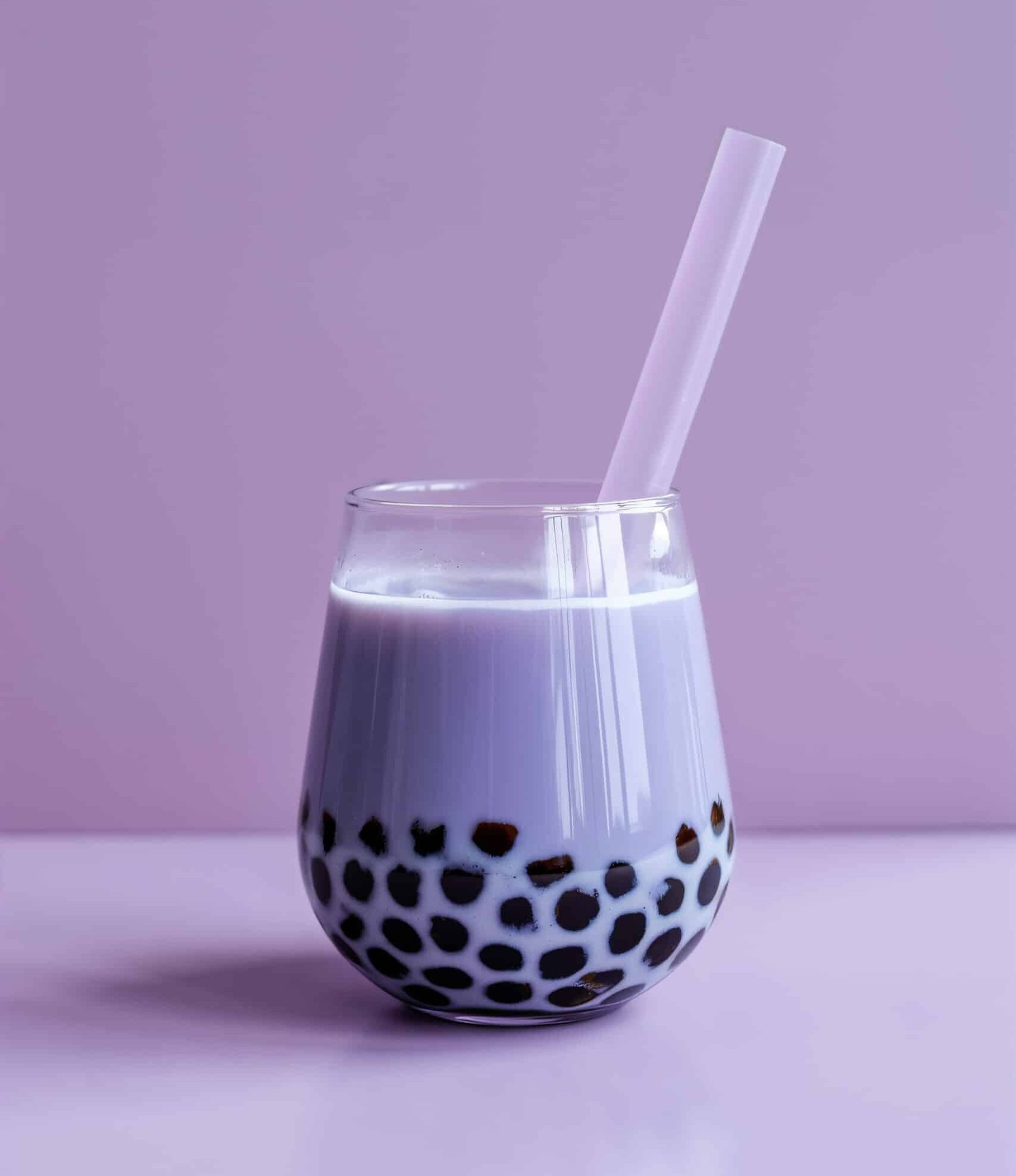

China, Japan, Turkey, the Netherlands, Great Britain, the rest of Europe and Asia, the USA… The history of tea has traveled through almost every culture on the planet. Its origin is ancient, dating back to 2700 BC in the Chinese Empire. It went from being a medicinal infusion to an elite social drink, and later to an iconic beverage of global importance. Today tea is appealing in its many formats, both traditional and innovative; its consumption extends worldwide, giving rise to different processing techniques.
Green, black, white and oolong teas, infusions, herbal, fruit or flower teas, refreshing or iced teas with fruit juices, milk teas, innovative bubble teas… There are many types of tea, ready to prepare or ready to drink, present in today’s market. But for the growth of the industry, Mintel points out that improving flavor perception will be crucial, as it is the weak point of this category. One of the strategic ingredients to solve sensory challenges is grape juice concentrate, which helps with color, sweetness and astringency.
- What role does grape essence play in tea beverages?
- Types of juice concentrates and technical variants: which one to choose depending on the type of tea?
- Technical specifications to control in tea + grape juice formulas
- Key regulatory requirements for a successful beverage
- JULIAN SOLER: solutions based on grapes
What role does grape essence play in tea beverages?
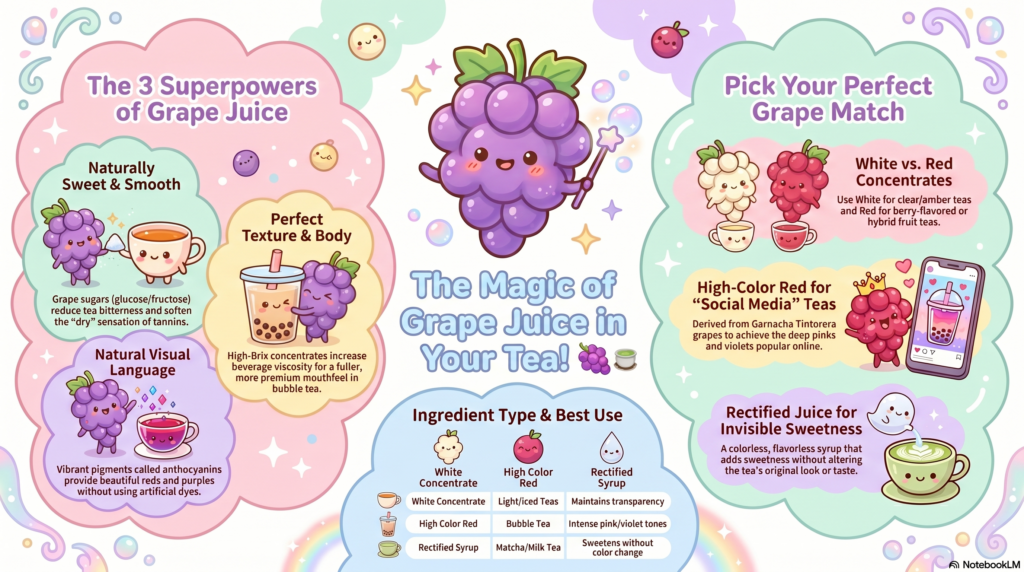
In industrial tea beverage applications and bubble tea type formulations, grape juice should be considered multidimensional. It is an ingredient that can act simultaneously on multiple physicochemical and sensory variables within the formulation and manufacturing process of the beverage. Basically, it has 4 main functions:
| Main functions of grape juice concentrate | |
| 1 Modulates flavor | Provides natural sugars (fructose and glucose) that deliver subtle sweetness and soften tea astringency. |
| 2 Provides body | Depending on °Brix, grape juice can modulate the density of the formulated beverage. Ideal for complex matrices such as bubble tea or ready to drink teas. |
| 3 Helps build visual language | Provides color depending on grape varieties and standard qualities, from high color red concentrate to white. Avoids artificial colors. |
| 4 Adds aromatic notes | Enhances fruity aromatic profiles in flavored premium teas. Avoids artificial aromas. |
Sweetness
The natural sugar profile (only glucose + fructose) of white or red grape juice concentrate has a significant impact on the sensory perception of tea during tasting. In addition to sweetening naturally, it also helps modulate the phenolic compounds present in herbal infusions.
Tea polyphenols (tannins) generate astringency, a mechanism usually attributed to oral friction caused by the interaction of polyphenols with salivary proteins. This produces that characteristic dry sensation. To a lesser extent, tea astringency can also come from caffeine. However, in high quality tea it is usually desirable to have a balanced astringency, so that the rough sensation in the mouth feels pleasant.
Beyond storage or processing methods that can modify astringency across different types of tea, the incorporation of fruit concentrates with natural sugars can help reduce this perception of dryness and improve roundness on the palate, thanks to their sweetening capacity and fruity aromatic notes.
- Acts as a natural sweetener. Sweetness helps reduce the perception of astringency.
- Aroma and astringency interaction. The addition of fruit extracts can increase perceived sweetness and reduce astringency. This impact of aroma on astringency was published in a study between the Center for Taste and Feeding Behavior and the University of Burgundy in France, where Chardonnay fruit extracts were added to red wine extracts. It was also shown that ciders were perceived as more astringent when tasted without a nose clip.
In addition, the Department of Chemistry at the University of York demonstrated that sugar significantly reduces the bitterness of tea coming from caffeine. It does not only mask it, it also modifies the fundamental chemical composition of the beverage to change its taste.
Body
Grape juice can also act as a modulator of density and mouth perception. A typical white or red concentrate is usually around 65 °Brix, which translates into a high load of soluble solids and an intense flavor and sweetness from natural fruit.
How does it improve tea body?
- Increases viscosity, providing a fuller sensation. The concentrate can slightly thicken the beverage when incorporated into the formulation.
- Improves mouthfeel. Formulators can tailor the texture and flow of tea to improve the sensory experience. This is especially relevant in bubble tea.
From an operational perspective, grape juice concentrate can be stored in less refrigerated space and requires less energy for transport. In addition, a high °Brix helps product stability and quality, because with less water it naturally inhibits microbial growth. The higher the sugar concentration, the greater the osmotic pressure. This creates an environment that makes it difficult for microorganisms to survive. This means longer shelf life for beverages and ready to drink teas.
At JULIAN SOLER we develop grape based solutions for each specific requirement of our clients: juices with different Brix levels, variations in acid profiles, and different special qualities such as organic, NFC white and red, virgin or SO2 free red or white concentrate, organic or baby food red or white concentrate, etc. Request a sample.
Color

In tea beverages, color is becoming a strategic positioning tool. Conventional teas still show the brown, green or amber tones from their polyphenols. But more innovative trends such as bubble tea require disruptive colors, pinks, violets… this is how they capture consumers and dominate social media.
Grape extract is a multifunctional ingredient that can also enhance the technical color palette. Red variants have strong coloring power thanks to their phenolic composition, especially pigment compounds (anthocyanins) present in the skin of the fruit. This helps build or reinforce the visual identity of the product.
This juice allows:
- Achieving intense reddish, magenta or violet tones, especially in fruit tea or bubble tea applications.
- Maintaining classic tea tones when tea should remain the protagonist. In this case, white concentrates with low color impact are used.
- Increasing sweetness without altering color, using rectified grape juice concentrate, which is a non caramelized syrup containing only grape sugars. Ideal for exotic beverages, refreshing cocktails, matcha or light teas.
Types of juice concentrates and technical variants: which one to choose depending on the type of tea?

There are different standard qualities of grape juice concentrates, each with distinct characteristics, densities, colors and implications for the final formulation.
| Standard qualities | Which one to choose? |
| White concentrate and white NFC | These are clear or low color variants. Useful in ready to drink tea formulations or light fruit teas where transparency or the natural tone of the beverage should be preserved. They mainly provide sweetness and body without affecting appearance. |
| Red concentrate | They contain phenolic compounds that provide color and fruity character. It has a stronger sensory impact than white concentrate and can shape both the flavor and appearance of tea. Ideal for berry teas, hybrid tea and fruit beverages, and teas where balance between flavor, color and sweetness is needed |
| High color red concentrate | This grape juice concentrate comes from the Garnacha Tintorera variety, which has a high concentration of anthocyanins in both skin and pulp, providing strong color intensity. Ideal for visually striking beverages without the need for artificial colorants. For example in the bubble tea segment, where product aesthetics are part of the consumer experience. |
| Rectified concentrate | This is a colorless product free of additives. It is useful in formulations where maximum stability is required or where color must remain unchanged. For example in sensitive formulations such as milk tea, although it does not eliminate the need for stabilizers. |
| Red or white NFC | This is grape juice not obtained from concentrates, meaning it is not processed. It is the closest ingredient to the fruit, although it does not provide the same functionality and stability in processing and storage as a concentrate. NFC is ideal for developing premium beverages and baby food, where consumers demand authentic ingredients with high value linked to origin, sustainable production or tradition. |
Technical specifications to control in tea + grape juice formulas
When using grape juice concentrates in systems such as tea or bubble tea, it is essential to define and control certain technical parameters when sourcing the ingredient and formulating products.
°Brix
°Brix defines the level of sugar concentration in the extract. It contributes to sweetness, impacts viscosity of the final product and influences mouth perception.
pH
The pH of grape juice concentrate is one of the most critical parameters, as it can influence flavor, stability and the balance between sugar and acidity in the beverage. This type of juice is typically acidic, between pH 2.8 and 4 depending on the grape variety, which leads to a range of flavor profiles from bright fruity notes to more rounded and smooth flavors.
In fruit tea this can provide freshness and balance. In tea with dairy formulations it can increase the risk of curdling, so stabilizers must be used.
Sulfites
Sulfites SO2 or sulfur dioxide are a natural chemical compound. Their main function is technical, to control the presence of microorganisms. However, their presence above certain levels requires declaration as an allergen.
For this reason, at JULIAN SOLER we are pioneers in producing SO2 free grape juice concentrate, under the highest food safety standards.
Color
The color of grape juice concentrate can vary in intensity depending on grape variety and processing and storage systems. Specifically, absorbance is measured to define the color intensity of the juice and meet client requirements.
Key regulatory requirements for a successful beverage
Beyond formulation, the success of any beverage in international markets depends on compliance with regulations. When focusing on the addition of fruit extracts, the following must be considered:
In Europe. Special attention must be paid to:
- Nutritional claims. According to Regulation EC 1924/2006, the label “no added sugars” can only be used if no ingredients have been added for their sweetening properties. If sugars are naturally present, the label must state “contains naturally occurring sugars”.
- Sulfite declaration. According to Regulation EU 1169/2011, if the product contains sulfite concentrations above 10 mg per kilogram or 10 mg per liter (in terms of total SO2), it is considered an allergen or substance causing intolerance.
JULIAN SOLER: solutions based on grapes
Through a unique and sustainable method, we capture the full essence of the grape to offer our clients juices and concentrates that preserve the nutrients and sensory profiles of the fruit.
Our advanced storage system allows us to preserve grape juice concentrate at controlled low temperatures, maintaining its physicochemical and organoleptic properties and preventing oxidation. This is how we preserve the color intensity of our products and ensure year round supply for our clients.
Contact us, we are your Global Grape Solution Supplier. We deliver anywhere in the world.




 by
by